Tesamorelin vs semaglutide: mypeptidesrx comparisons
I would pencil the treatment goal above each comparison. Total weight, glucose control and deep abdominal fat lead to different papers.
Tesamorelin vs semaglutide
Tesamorelin stimulates the growth-hormone axis, with an approved use for excess abdominal fat in adults with HIV-associated lipodystrophy. Semaglutide acts through GLP-1 and has approved uses including type 2 diabetes and chronic weight management, as well as specified cardiovascular, kidney and liver indications. The drugs begin with different clinical questions.
For semaglutide, STEP 1 measured body-weight change in adults with overweight or obesity without diabetes. For tesamorelin, the pivotal HIV trial measured visceral adipose tissue. Those outcomes refuse the tidy ranking I initially wanted. No direct tesamorelin-versus-semaglutide trial appears in the source list here.
| Treatment question | Relevant evidence | Population to carry with it |
|---|---|---|
| Overall weight change | Semaglutide in STEP 1 | Overweight or obesity without diabetes |
| Major kidney-disease events | Semaglutide in FLOW | Type 2 diabetes with chronic kidney disease |
| Visceral abdominal fat | Tesamorelin’s pivotal trial | HIV with abdominal fat accumulation |
Tesamorelin vs tirzepatide
Tirzepatide engages GIP and GLP-1 receptors. Its SURMOUNT-1 trial measured body-weight change in adults with obesity or overweight and a weight-related complication, without diabetes. Tesamorelin’s pooled trials concern body composition in HIV-associated lipodystrophy. No direct comparison between these drugs is listed here.
Reversing the search to “tirzepatide vs tesamorelin” leaves the same evidence gap. I separate the treatment targets before considering the comparison: overall weight management or the HIV-related visceral-fat indication. A clinician’s assessment would also involve health history, contraindications and tolerability.
Tirzepatide vs semaglutide: two direct trials
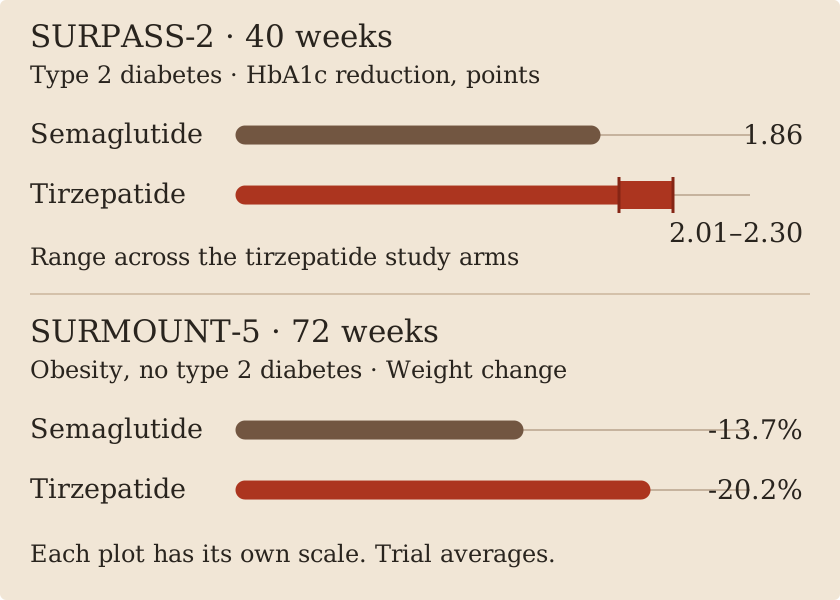
Here the studies do test the drugs against each other. SURPASS-2 enrolled 1,879 adults with type 2 diabetes for 40 weeks and compared tirzepatide with semaglutide 1 mg. Tirzepatide’s HbA1c reduction was 2.01-2.30 percentage points across the studied doses, versus 1.86 points with semaglutide.
SURMOUNT-5 enrolled 751 adults with obesity without type 2 diabetes and tested maximum tolerated doses for 72 weeks. Mean weight change was -20.2% with tirzepatide versus -13.7% with semaglutide (P<0.001). The two trials favour tirzepatide on their measured outcomes. They also show why the population, dose comparison and measurement belong beside a result.
Different questions, different units: HbA1c fell in percentage points; body weight changed as a percentage of starting weight.
Comparisons of clinical events
Semaglutide’s SELECT cardiovascular trial and FLOW kidney trial offer event-outcome evidence in specified populations. Neither trial tested semaglutide against tirzepatide or tesamorelin. I place considerable value on those outcomes while resisting an indirect claim that they establish superiority over the other drugs.
Safety also resists a simple league table. Semaglutide’s safety review and tirzepatide’s gallbladder and pancreatitis meta-analysis use different evidence collections. Their cautions are relevant, but comparing their wording cannot establish which drug is safer for an individual.
Sermorelin vs tirzepatide
The reading list contains no direct sermorelin-versus-tirzepatide trial. I leave sermorelin’s question open here; tesamorelin’s findings cannot answer for a different molecule. A shared connection to hormone biology cannot supply a missing clinical comparison.
The FAQ covers related questions about prescriptions, research-labelled material and individual treatment decisions.
Metsera vs tirzepatide
This bibliography identifies no Metsera treatment and supplies no comparison with tirzepatide. With that identity unresolved here, I cannot draw an efficacy ranking from these sources.